Despite years of intense advocacy from health and human rights groups, the effort to fully legalise commercial sex work in Zimbabwe remains stalled, trapped between progressive public health concerns and deep-seated social morality. The industry, driven by dire economic necessity, thrives in the shadows, yet its practitioners today enjoy a measure of protection that was …
Ma MP itai plan decriminalize Sex Work – Please
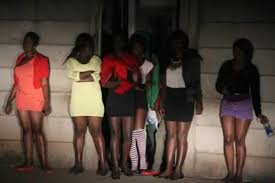
Despite years of intense advocacy from health and human rights groups, the effort to fully legalise commercial sex work in Zimbabwe remains stalled, trapped between progressive public health concerns and deep-seated social morality. The industry, driven by dire economic necessity, thrives in the shadows, yet its practitioners today enjoy a measure of protection that was unthinkable a decade ago—thanks not to Parliament, but to the courts.
The situation is a legal tightrope act. The act of exchanging sex for money is not explicitly criminalised in the country’s main statutes, the Criminal Law (Codification and Reform) Act. However, Parliament cunningly criminalised everything that makes the trade viable: solicitation, procuring clients, living off the earnings (brothel keeping), and coercing persons for sexual conduct.
This legal net, designed to eradicate the trade, instead empowered law enforcement to operate with impunity, frequently arresting women based merely on location or appearance. The result was a cycle of abuse, extortion, violence, and increased HIV vulnerability for sex workers, who feared reporting crimes to the very police meant to protect them.
The most significant step toward decriminalisation, albeit indirect, occurred in June 2015. Following the mass arrest of nine women in Harare, Zimbabwe Lawyers for Human Rights (ZLHR) successfully challenged their convictions at the Constitutional Court.
The landmark ruling found that the arbitrary arrests violated the women’s rights to personal liberty and equal protection under the 2013 Constitution. Crucially, the court established that police could no longer arrest individuals solely based on suspicion, appearance, or location. For a conviction of “solicitation” to stand, the police must now present concrete evidence of the soliciting conduct, and the alleged client must be present in court.
The impact was immediate and profound. Activists and reports from organisations like the Centre for Sexual Health and HIV/AIDS Research (CeSHHAR) confirm a substantial drop in reported police harassment and arbitrary arrests. Sex workers gained a newfound confidence and freedom of movement, a structural change that has directly improved their safety and encouraged better engagement with health services.
While the 2015 ruling provided judicial clarity, it stopped short of achieving full decriminalisation, which would recognize sex work as legitimate labour and allow for regulation, taxation, and legal protection.
The path to legislative change remains clogged by social conservatism. A 2011 proposal by then-MDC-T MP Thabita Khumalo to fully decriminalise sex work—arguing it would help manage the HIV epidemic, boost women’s rights, and curb police corruption—met with ferocious resistance, with debate dominated by moral and religious outrage rather than evidence-based policy.
Today, the political will to push comprehensive legislation is weak. The national discussion remains focused on morality, even as health professionals globally urge a decriminalisation approach, arguing it is the most effective way to empower sex workers, reduce violence, and contain the country’s high HIV prevalence among the population.
In Zimbabwe, sex workers are safer than they were a decade ago, but they remain unprotected by labour law, denied access to justice when abused, and unable to organise legally. The progress is a triumph of constitutional rights, but the ultimate goal—legalisation—is still waiting for a political breakthrough.